 Your Trusted Digital Growth Partner






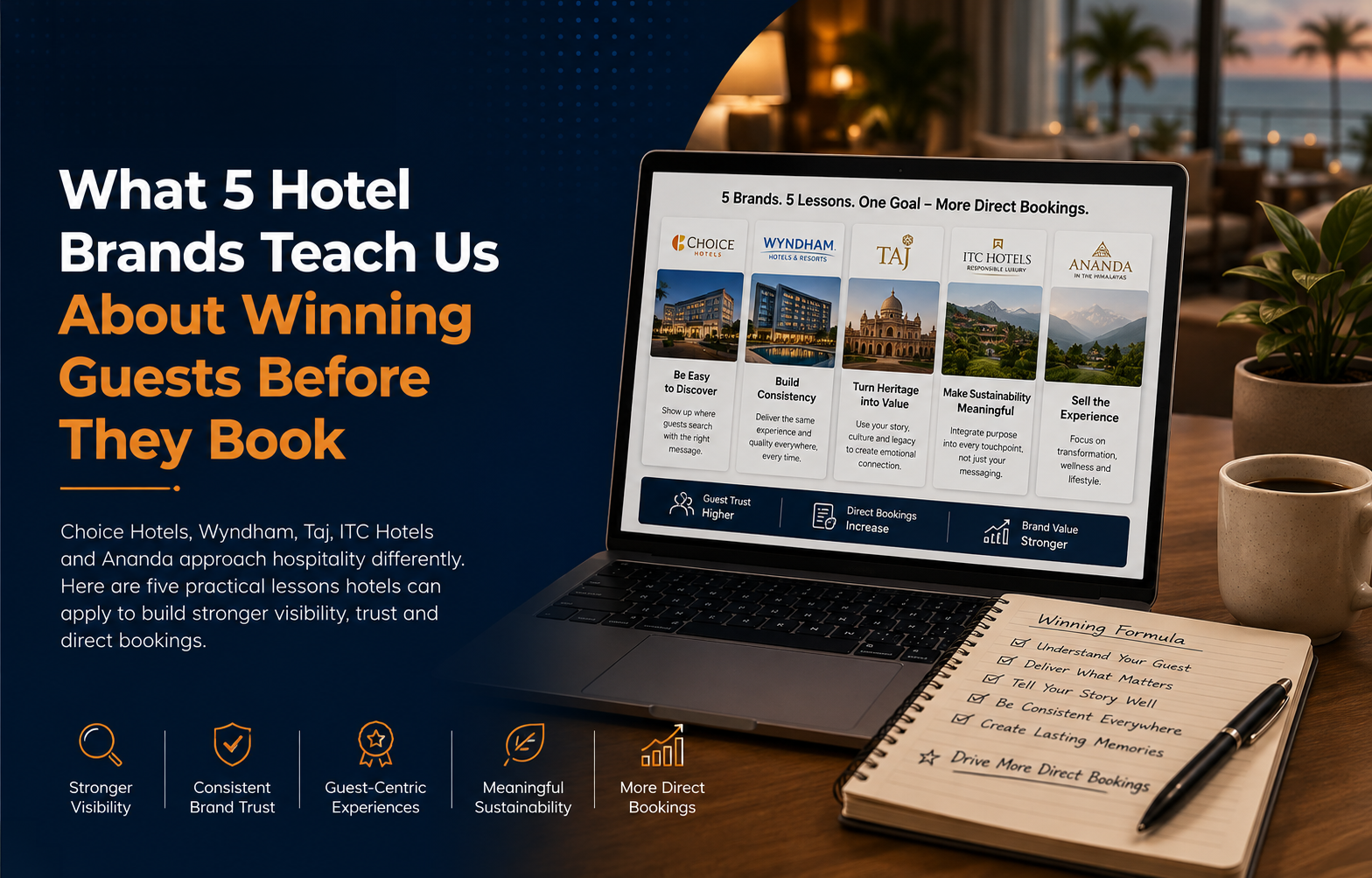
Choice Hotels, Wyndham, Taj, ITC Hotels and Ananda approach hospitality very differently. Together they reveal five practical lessons hotels can apply to build stronger visibility, trust and direct bookings — long before a guest reaches the booking page.
Hotel guests rarely make their booking decision based on room price alone.
Before they compare rates, they are already forming an opinion about the hotel. They look at the brand, the destination, the experience, the reviews, the visuals, the values and, most importantly, whether the property feels right for their trip.
That is why successful hotel brands do more than promote rooms. They build a reason to choose them before the guest ever reaches the booking page.
From the global scale of Choice Hotels and Wyndham Hotels & Resorts to the heritage positioning of Taj Hotels, the sustainability-led approach of ITC Hotels, and the wellness-focused identity of Ananda, these brands operate in very different segments. Yet they reveal five lessons for hotels looking to build stronger demand, improve brand recall and generate more direct bookings.
Be Easy to Discover
One of the biggest challenges for hotels today is simply getting discovered. Travellers search across Google, OTAs, social media, maps, review platforms and travel websites before making a decision. A strong hotel brand needs to be visible wherever the guest is looking.
Choice Hotels demonstrates the power of a broad brand portfolio and distribution strategy. Different brands can target different traveller needs while benefiting from a larger hospitality ecosystem.
The lesson for independent hotels
You don't need dozens of properties to build visibility. You need to make your hotel easy to find and easy to understand. Your digital presence should clearly communicate:
Most of that work sits in search visibility and a well-maintained Google Business Profile.
Don't wait for guests to find your hotel. Build a digital presence that makes discovery easier.
Build Consistency
When travellers choose a familiar hotel brand, they often know what to expect. That expectation creates confidence.
Consistency across branding, communication, booking experiences and guest touchpoints can reduce uncertainty — especially when the guest is booking a property they have never visited before. Wyndham's large portfolio demonstrates how a recognizable hospitality brand can create familiarity across destinations and traveller segments.
The lesson for independent hotels
Consistency doesn't mean making everything look identical. It means making your brand recognizable. Your website, social media, Google Business Profile, advertisements, photography and booking experience should communicate the same positioning.
If your Instagram says luxury escape, but your website looks generic and your Google profile has outdated photographs, the guest receives mixed signals. Consistent brand and collateral design is what closes that gap.
Every digital touchpoint should feel like the same hotel brand.
Turn Heritage Into Value
Some hotels have something competitors cannot easily copy: history.
Taj has built a strong association with Indian hospitality, heritage, service and premium experiences. Its properties are not simply promoted as places to sleep — the brand experience becomes part of the reason to travel.
This is an important distinction. A room can be compared by price. An experience is much harder to compare.
The lesson for hotels
Your property's story can become a competitive advantage. Maybe you have:
Don't hide these details in an “About Us” page. Make them part of your marketing.
Don't just sell the room. Sell the story behind the stay.
Make Your Values Part of the Brand
Modern travellers increasingly pay attention to what a hospitality brand stands for. Sustainability, responsible tourism, local sourcing and environmental initiatives can influence how guests perceive a hotel.
ITC Hotels has built sustainability into its broader brand positioning, showing that responsible hospitality can become part of the guest proposition rather than remaining an internal business initiative.
The lesson for hotels
If your property is genuinely doing something meaningful, communicate it. For example:
But avoid turning sustainability into empty marketing language. Show the actual practices behind the claim.
Your values can strengthen your positioning when they are backed by real actions.
Sell the Transformation
Ananda takes a different approach to hospitality. Its positioning is strongly connected with wellness, wellbeing and transformation. The guest isn't simply buying accommodation — they are buying a feeling and an outcome.
This is one of the most powerful principles in hospitality marketing. Guests don't necessarily remember the specifications of their room. They remember how the stay made them feel.
The lesson for hotels
Think beyond features. Instead of only listing spacious rooms, a swimming pool, a restaurant, a spa and conference facilities, explain what those features mean for the guest.
“Luxury spa facilities.”
“Unwind after a long journey with treatments designed to help you slow down and recharge.”
The second message sells an experience rather than a facility. That is also why guest-shot content tends to convert better than a polished feature list.
Sell the transformation your guest wants, not just the features you provide.
The Bigger Lesson: Demand Is Built Before the Booking
These five brands operate very differently. Their target audiences, positioning, property types and experiences are not the same. But they demonstrate a common principle: guests begin deciding long before they click “Book Now.”
The decision-making journey may look something like this:
If your marketing only appears at the final stage, you are competing primarily on price and availability. But if your brand builds preference earlier, you have a much stronger opportunity to influence the booking decision.
What Hotels Can Apply Today
You don't need the marketing budget of a global hotel group to apply these principles. Start with the fundamentals.
From Discount-Driven to Brand-Driven Demand
A hotel that constantly promotes “20% OFF” may get attention. But a hotel that communicates “here's why your stay with us will be different” can build something more valuable — preference.
The strongest hospitality brands don't simply wait for travellers to compare prices. They shape what travellers want before the comparison even begins. That is where effective hotel marketing becomes more than advertising. It becomes brand building.
Final Thought
The common lesson is simple: don't compete only for the booking. Compete for the guest's preference before the booking decision happens.
Because when guests already know why they want to stay with you, price becomes only one part of the conversation.