 Your Trusted Digital Growth Partner





How hotels can use OTAs for visibility while building stronger direct bookings, reducing commission pressure and creating healthier long-term digital demand.
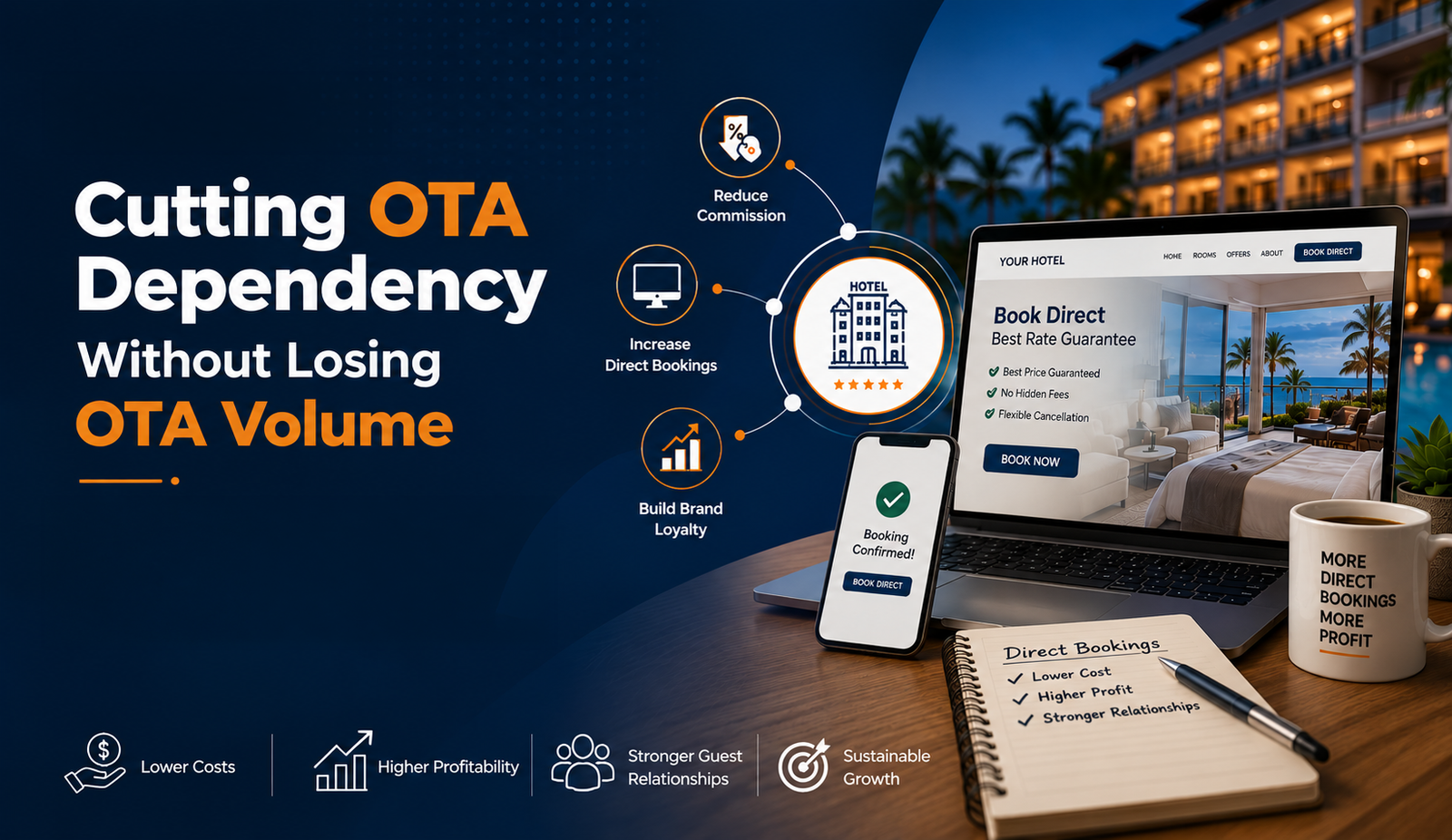
Online travel agencies can be extremely valuable for hotels. They provide visibility, reach travellers at the right moment and help properties generate bookings when direct demand is limited.
The problem begins when an OTA becomes the primary source of bookings.
Hotels then become dependent on commissions, platform algorithms and external customer relationships. The goal should not be to eliminate OTAs. Instead, hotels should build a healthier balance between OTA bookings and direct bookings.
The right strategy is not “OTA versus direct booking.” It is using OTAs for discovery while making your own digital channels strong enough to convert guests directly.
Why OTA dependency becomes expensive
OTA platforms bring strong visibility, but every booking usually comes with a commission. Over time, this can significantly reduce the property's net revenue.
Hotels also lose an opportunity to build a direct relationship with the guest.
When most guests discover and book through third-party platforms, the hotel has less control over the customer journey, communication and future repeat bookings.
Build a stronger direct booking channel
Your hotel website should not simply display rooms and contact information. It should work as a booking-focused digital sales channel.
Your website should make direct booking easy.
Guests should immediately understand:
A slow or confusing booking experience can send potential guests back to an OTA.
That is exactly the work a conversion-focused hotel website is built to do.
Make your website visible before the booking decision
Direct bookings depend heavily on visibility. A hotel cannot expect direct reservations if travellers cannot find the property when they are searching.
Search engine optimisation can help hotels appear for relevant searches related to destinations, accommodation, room types, experiences and traveller intent.
Useful website content can also answer the questions guests have before booking, making the hotel more visible while building trust at the same time.
Strengthen Google Business Profile visibility
Local search is particularly important for hotels because travellers frequently use Google Search and Google Maps while researching accommodation.
A properly optimised Google Business Profile can support visibility through accurate business information, photos, reviews, updates and relevant local signals.
The objective is simple: when a traveller searches for accommodation in your destination, your hotel should be easy to discover and easy to evaluate.
Use social media to create demand
Social media should not only be used to post attractive hotel photographs.
Hotels can use content to showcase rooms, experiences, destinations, guest moments, food, amenities and local attractions. This creates familiarity before the traveller is ready to book.
User-generated content can be particularly valuable because potential guests often want to see how a property actually looks and feels through the eyes of other travellers.
Use paid advertising strategically
Paid advertising can help hotels reach travellers with stronger booking intent.
Google Ads can capture users actively searching for accommodation, while Meta Ads can help hotels build demand through destination, experience and offer-based campaigns.
The important part is connecting advertising with a strong landing page and booking experience rather than simply sending every visitor to the homepage.
Give guests a reason to book directly
Hotels should communicate clear direct-booking value.
The advantage does not always need to be a large discount. Sometimes convenience, flexibility or an additional benefit can be enough to encourage a guest to book directly.
Retarget visitors who did not book
Not every visitor will make a booking on the first visit.
Retargeting can help hotels reconnect with people who previously visited the website, viewed rooms or interacted with campaigns but did not complete a booking.
This creates additional opportunities to convert existing interest instead of constantly paying to find completely new audiences.
Turn OTA guests into repeat direct guests
An OTA booking does not have to remain an OTA relationship forever.
Hotels can focus on delivering a strong guest experience and creating reasons for guests to return. Once a traveller has experienced the property, future stays can potentially become direct bookings.
Post-stay communication, loyalty incentives, useful content and direct engagement can help maintain that relationship.
Track the right numbers
Reducing OTA dependency should be treated as a measurable business objective rather than simply a marketing idea.
Hotels should regularly review metrics such as:
The goal is a healthier booking mix
OTAs remain an important part of hotel distribution. They can introduce properties to travellers who may never have discovered them otherwise.
The real opportunity is to avoid allowing one channel to control the entire booking strategy.
A strong hotel digital strategy combines OTA visibility with website conversion, SEO, Google Business Profile optimisation, social media, paid advertising and guest relationship building.
Use OTAs to increase visibility. Use your digital ecosystem to build ownership of the guest relationship.
Final thoughts
Cutting OTA dependency does not mean abandoning OTAs. It means creating enough direct demand that your hotel has more control over where bookings come from.
For independent hotels, resorts, travel companies and hospitality businesses, the strongest approach is usually a balanced digital strategy: keep the visibility OTAs provide while continuously improving the channels you own.
When your website, search visibility, social media, advertising and guest experience work together, direct bookings can become a stronger and more sustainable part of your overall booking mix.