 Your Trusted Digital Growth Partner






Fortune Hotels, Lemon Tree Hotels and Rosewood Hotels & Resorts show three very different approaches to building memorable hotel brands. The common lesson is simple: strong positioning, distinctive guest experiences and consistent brand identity help hotels stay remembered long after the stay.
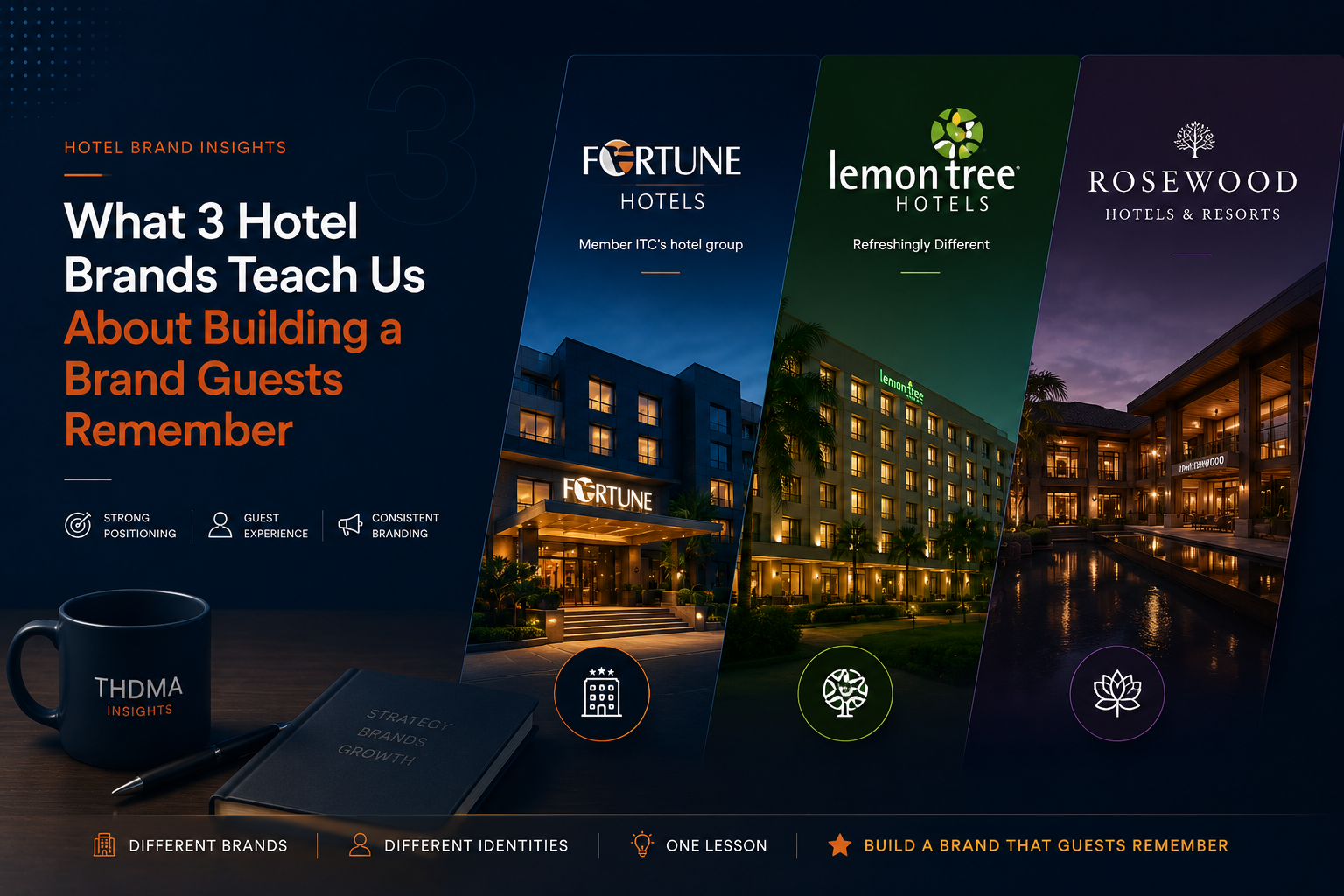
A hotel brand is remembered long before a guest returns home.
It starts with what they see, what they expect, how the property makes them feel and whether the experience matches the promise made before booking.
In a crowded hospitality market, simply having beautiful rooms or competitive pricing is not enough. Hotels need a recognisable identity that helps guests understand what makes them different.
Fortune Hotels, Lemon Tree Hotels and Rosewood Hotels & Resorts operate at very different positions in the market. Yet each offers useful lessons in how hospitality brands can create stronger recognition and deeper guest connections.
Here are three practical lessons hotel businesses can apply to build a brand guests remember.
Build Recognition Through Clear Positioning
Fortune Hotels demonstrates the value of creating a clear and recognisable position within the hospitality market.
When a hotel brand serves multiple locations and guest segments, consistency becomes extremely important. Guests should be able to understand what the brand represents before they even arrive at the property.
The lesson for independent hotels
You do not need to look like every other hotel. You need to clearly communicate what makes your hotel worth choosing. That positioning can come from your location, service style, target audience, food and beverage experience, business facilities, leisure offering or overall personality.
The stronger the positioning, the easier it becomes for guests to remember the brand — and the easier it becomes to build search visibility around something specific rather than generic.
Be clear about what your hotel stands for — and communicate it consistently.
Make the Guest Experience Part of the Brand
Lemon Tree Hotels provides a useful lesson in turning the guest experience itself into part of the brand identity.
A hotel brand is not only its logo, website or advertising. It is also the way guests experience the property. From the booking journey to arrival, service, communication, dining and departure, every interaction contributes to the perception of the brand.
Hotels that create distinctive and consistent experiences are easier to remember because guests associate the brand with how they felt during their stay.
What this means for marketing
Marketing should not operate separately from operations. The promise made in an advertisement should feel connected to what the guest actually experiences — which is also why guest-created content tends to be more persuasive than a polished brand film.
Your guest experience is one of your strongest branding assets.
Turn Experience Into Emotional Memory
Rosewood Hotels & Resorts highlights another powerful branding principle: memorable hospitality is often emotional rather than purely functional.
Luxury guests are not simply purchasing a room. They are purchasing an experience, a feeling and a sense of place. Details such as architecture, storytelling, service, design, local culture and personalisation can create memories that stay with guests long after checkout.
You do not need a luxury resort to apply this
A boutique hotel can tell the story of its neighbourhood. A resort can build experiences around its destination. A business hotel can create a thoughtful, frictionless stay for frequent travellers. The objective is to give guests something meaningful to remember.
Do not only sell a room. Create an experience guests can remember.
What These 3 Brands Have in Common
Fortune Hotels, Lemon Tree Hotels and Rosewood Hotels & Resorts have different positioning, different audiences and different guest experiences. But the underlying branding principles are remarkably similar.
A memorable hotel brand needs:
The strongest hospitality brands do not rely on discounts alone to create demand. They build recognition and trust before the guest ever reaches the booking page.
What Independent Hotels Can Learn
Independent hotels often assume that strong branding requires a large marketing budget. It does not. What matters first is consistency.
When these touchpoints work together, the hotel becomes easier to recognise, easier to trust and easier to remember.
Branding Is More Than a Logo
A hotel logo is only one part of a brand. Branding is the complete perception a guest forms through every interaction with your hotel.
This is why strong hospitality branding requires alignment between design, marketing, communication and guest experience.
cannot compensate for an unclear message.
cannot compensate for a poor guest experience.
And a great hotel cannot maximise its potential if its digital presence fails to communicate its value.
Build a Brand Guests Remember
The biggest lesson from Fortune Hotels, Lemon Tree Hotels and Rosewood Hotels & Resorts is not that every hotel should copy their branding. It is that every hotel should understand its own identity.
Know who you want to attract. Know what makes your property different. Create an experience around that difference. Then communicate it consistently across every guest touchpoint.
Because the hotels guests remember are rarely the ones that simply shouted the loudest. They are the ones that gave guests a clear reason to remember them.