 Your Trusted Digital Growth Partner






A practical look at digital marketing lessons from major hospitality brands and how independent hotels can apply similar principles to build visibility, trust and direct bookings.
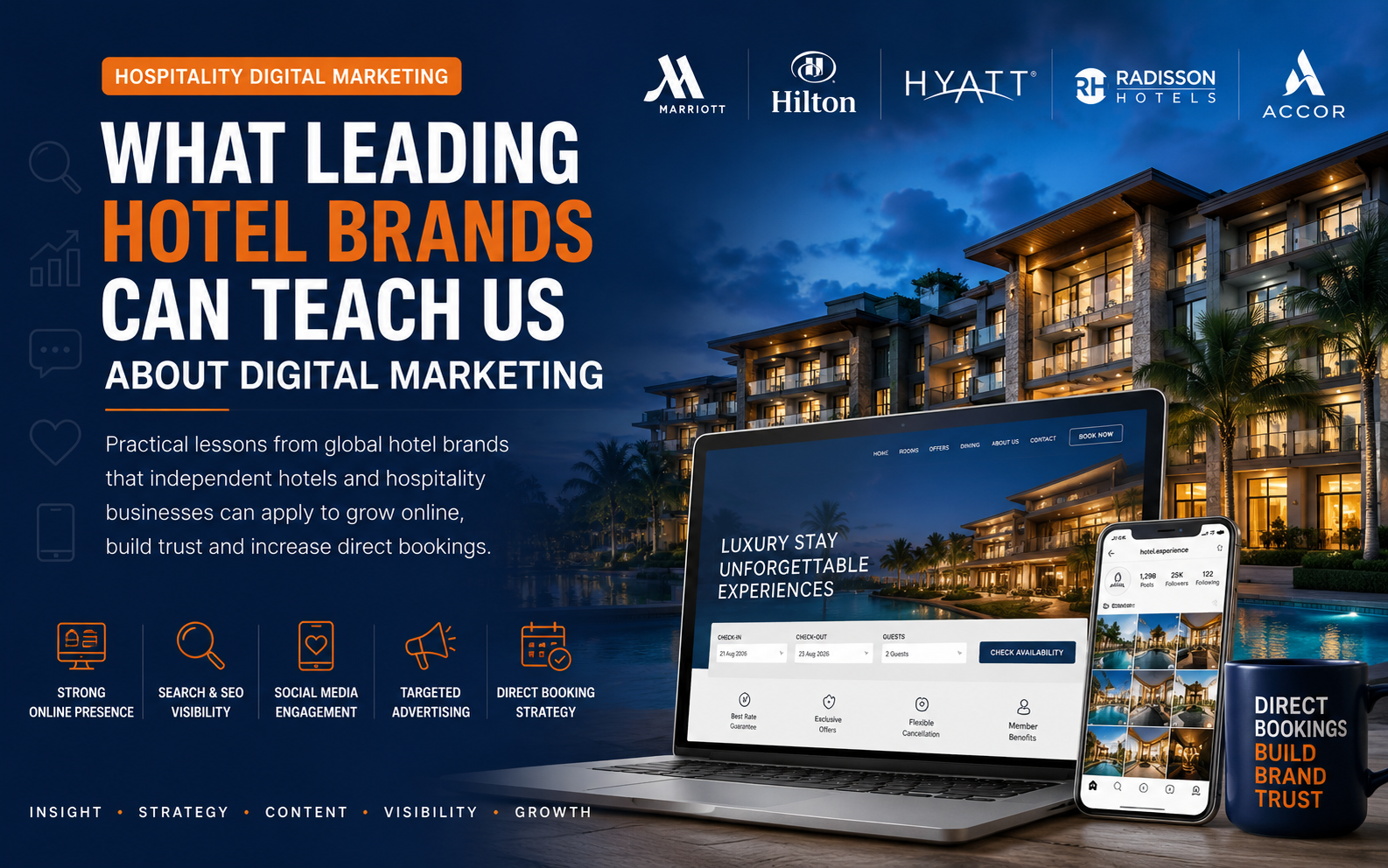
The hospitality industry has changed dramatically. Travellers today often discover hotels through search engines, social media, online travel platforms, maps, review websites and hotel websites before making a booking decision.
Large hotel groups have invested heavily in digital experiences, brand visibility, content, loyalty programmes and direct booking channels. While independent hotels may not have the same budgets, there are valuable lessons they can apply to their own digital marketing strategies.
This article looks at five well-known hotel groups — Marriott, Hilton, Hyatt, Radisson and Accor — from a digital marketing perspective and highlights practical ideas that smaller hospitality businesses can adapt.
Build a Strong Digital Brand Experience
Marriott: A global hospitality group with a large portfolio of hotel brands serving different traveller segments.
One important lesson from large hotel groups is the importance of creating a consistent digital brand experience. Travellers should be able to understand what a hotel offers, who it is designed for and why they should consider staying there.
For independent hotels, this means the website should not simply display rooms and contact information. It should communicate the complete experience — location, rooms, amenities, dining, experiences, nearby attractions and reasons to book directly.
What independent hotels can learn
A conversion-focused website and consistent brand design are where this work starts.
Make the Customer Journey Easy
Hilton: A major hospitality company with a wide portfolio of hotels and destinations.
A hotel website should make it easy for visitors to move from discovery to decision. When travellers are interested in a property, they normally want quick answers about availability, location, rooms, amenities, policies and booking options.
Hotels can improve conversions by reducing unnecessary steps and making important information easy to find.
Practical improvements
Focus on the Guest Experience
Hyatt: An international hospitality company operating hotels and resorts across multiple markets.
Hospitality marketing becomes more powerful when it communicates the experience rather than simply promoting a room.
For example, a resort located near a popular destination can create content around local experiences, attractions, food, activities, events and travel planning.
This approach can help hotels attract travellers earlier in the research process, before they are ready to make a booking.
Instead of only publishing “Book our Deluxe Room”, create useful content such as “Best Things to Do During a Weekend Stay in Pune” or “Complete Guide to Planning a Weekend Resort Getaway”.
Think Beyond the Hotel Website
Radisson: A global hospitality brand with hotels across multiple destinations and market segments.
A hotel's website is important, but it is only one part of the digital ecosystem.
Travellers can discover a hotel through Google Search, Google Maps, social media, review platforms, travel websites and other digital channels.
That means hotels should maintain accurate and consistent information across the platforms where potential guests may discover them.
Keeping your Google Business Profile current is usually the highest-return item on that list.
Use Multiple Brands for Different Audiences
Accor: A global hospitality group operating a broad range of hotel brands serving different traveller segments.
One useful lesson from multi-brand hospitality companies is the importance of understanding different customer segments.
A business traveller, family traveller, luxury traveller and budget traveller may search differently and expect different experiences.
Hotels can improve their marketing by clearly defining their target audience and creating content specifically for that audience.
What Independent Hotels Can Apply Today
Independent hotels do not need the marketing budgets of global hotel groups to improve their online presence. They can start with a focused digital strategy.
Final Thoughts
The biggest lesson is not to copy what large hotel brands do. Instead, hospitality businesses should understand the principles behind their digital presence and adapt those principles to their own market, audience and budget.
Strong hospitality marketing combines visibility, useful content, trust, a good website experience and a simple path to enquiry or booking.
For independent hotels, resorts, travel companies and tourism businesses, a well-planned digital strategy can turn online visibility into measurable business opportunities.