 Your Trusted Digital Growth Partner






Ramada, The Park, Sarovar, Novotel and Ginger serve very different guest expectations. Their brands reveal an important hotel marketing lesson: demand grows when your positioning, experience, message and distribution match the guest you actually want to attract.
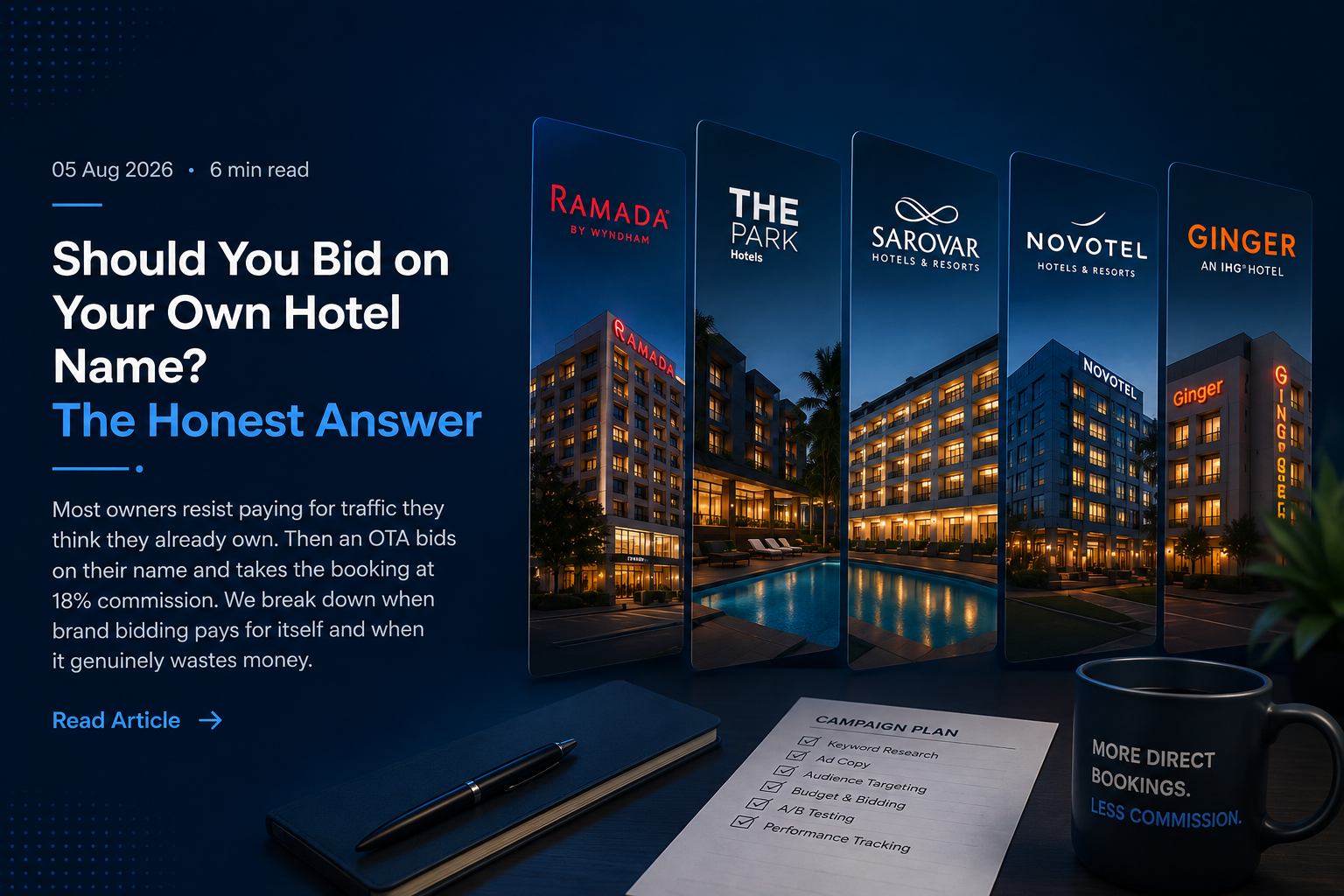
Hotel guests do not all choose a property for the same reason.
A business traveller may want reliability, location and speed. A leisure traveller may care more about atmosphere, experience and design. A family may look for convenience and comfort. A younger budget-conscious traveller may prioritise affordability, accessibility and simplicity.
That is why hotel marketing becomes much more effective when a property understands exactly who it wants to attract — and builds its positioning around that guest.
Ramada, The Park, Sarovar, Novotel and Ginger operate in different parts of the hospitality market, but together they provide five useful lessons for hotels trying to strengthen visibility, attract the right audience and generate more direct demand.
The lesson is simple: you do not need to appeal to everyone. You need to become the obvious choice for the right guest.
Consistency Creates Confidence
Guests often choose familiar brands because familiarity reduces decision-making risk. When a traveller books a property they have never seen, a recognisable name answers a lot of unspoken questions about cleanliness, service and what the room will actually look like.
Consistent branding helps guests know what to expect before arrival. Visual identity, messaging, service standards and digital presence should all reinforce the same promise.
The lesson for independent hotels
You can build the same effect at a smaller scale by creating your own recognisable identity. That consistency has to exist everywhere a guest encounters you:
If those five describe the same hotel in the same voice, uncertainty drops. Consistent brand and collateral design is what holds it together.
Your hotel does not need to be everywhere. It needs to look and feel consistent everywhere it appears.
Personality Makes a Hotel Memorable
The Park represents a more personality-led approach to hospitality branding. A hotel can compete through character, not only room features.
Design, culture, food, nightlife, experiences and storytelling can all become part of the brand. Guests increasingly remember how a property made them feel, and a strong personality helps a hotel stand apart from properties offering similar rooms at similar prices.
Where this shows up first
Social media becomes far more effective when it communicates a distinctive identity rather than simply posting room photographs. Social content built around the actual experience gives people something to remember you by.
If your hotel looks like every competitor online, your guest has little reason to remember you.
Relevance Across Different Markets Matters
Sarovar's broad presence across different destinations shows the importance of understanding local market demand while keeping a recognisable brand.
Hotel marketing cannot be completely disconnected from destination demand. Business hotels, leisure hotels, pilgrimage destinations and emerging markets each require different communication, and search behaviour changes based on location, traveller purpose and season.
What this means in practice
Hotel content should reflect local demand rather than repeating the same generic message everywhere. Local SEO and Google Business Profile optimisation are what let a property capture high-intent searches in its own market.
Your brand can stay consistent while your marketing message changes according to the market.
Sell the Complete Stay, Not Just the Room
Modern hotel guests evaluate the complete experience. A room is only one part of the buying decision.
Guests also weigh location, dining, workspace, family convenience, wellness, events, connectivity and experiences. Hotels should communicate that complete value proposition rather than leaving it to be discovered on arrival.
Where most hotels lose the booking
Website content should answer the guest's real questions before they reach the booking engine, and visual storytelling should show what staying at the property actually feels like. A conversion-focused website does that work; a brochure site does not.
Do not market 120 rooms. Market the reason someone would want to spend their next trip with you.
Simplicity Can Be a Competitive Advantage
Ginger demonstrates how a focused proposition can make a hotel easier to understand. Not every hotel needs luxury positioning.
Guests appreciate clarity when choosing accommodation, and a focused proposition communicates value quickly. Convenience, location, affordability, functionality and simplicity can all be powerful selling points on their own.
Digital marketing also becomes considerably easier when the hotel's core promise is clear — there is less to explain and fewer places for the message to drift.
If a guest cannot understand why your hotel is right for them in a few seconds, your positioning needs work.
What These Five Brands Have in Common
Five very different properties, five different guests, one shared principle.
These brands are different, but the marketing principle behind them is similar.
What Hotel Owners Can Apply Today
None of this requires a chain-scale budget. It requires decisions.
The Best Hotel Marketing Starts Before the Booking
Successful hotel marketing is not simply about offering discounts. It is about reducing uncertainty and creating preference before the guest reaches the booking page.
A hotel becomes easier to choose when the guest immediately understands:
At THDMA Solutions, we help hotels turn positioning, digital visibility and guest experience into stronger demand and more direct bookings.